A Neurodivergent Diagnosis Journey- A True Story- Part 1
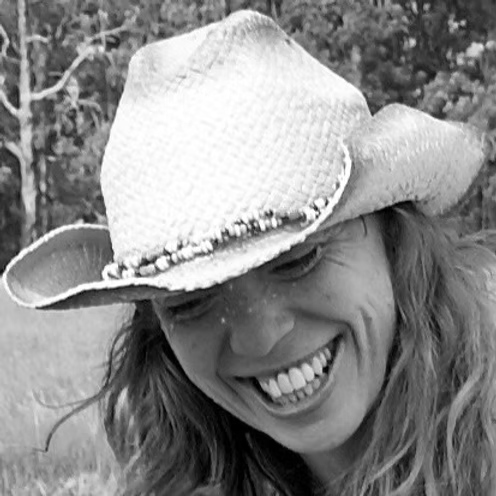

I had been seeing a psychologist for six years before I raised with her the possibility of being neurodivergent, or on the spectrum in any way. Originally, I had started seeing my psychologist for grief counselling after my brother took his life in 2018. As the years passed, life changed, and the world experienced the COVID-19 pandemic, my sessions shifted focus without me actually realising it and became oriented towards strategies dealing with burnout and work-life balance.
I was not supported in my job when I reached out to seek help with these issues. I decided to change career trajectory, take a step back and start a new role in a larger organisation as a Manager. I had been a Director for 15 years prior to this, and on a CEO pathway. I chose to step off this pathway for my health, well-being and family relationships which were all suffering.
After two years in the new role, I had to face the reality that I was not recovering from burnout as I had hoped. My fiancé shared with me some information on neurodivergent burnout which totally resonated with us both. I raised this possibility with my psychologist, who appeared shocked at the suggestion, or perhaps the possibility. She agreed this was worth investigating and so began my diagnosis journey that is still in progress and has so far taken 12 months.
At the start of my journey, my psychologist advised me that as I was seeing her under a Medicare funded mental health plan, she was not permitted to assess or diagnosis me officially in terms of neurodivergence. She could however send me through a range of screening tests that would reveal markers, indicating the likelihood of any neurodivergent traits, which she could share with me, but this could not be utilised in terms of an official diagnosis.
I completed approximately eight questionnaires. This experience was confronting, difficult and eye-opening. After receiving and assessing my responses, my psychologist advised that (while not a diagnosis!!) I demonstrated indicators of ADHD, Highly Sensitive Person, and high masking behaviours. In completing the questionnaires I had begun to suspect that I had been masking, unconsciously, from a very young age. I found this confronting in terms of knowing myself, so the feedback on this was and remains difficult to process. My psychologist advised me that it was likely that the combination of these three traits had caused the overwhelming, exhausting, and neurodivergent burnout I had been dealing with for years.
I admit, I felt kind of let down by our medical system that this was my experience, suffering for years and investing greatly in my mental and physical health so I could keep functioning and contributing. Shockingly, women are more likely to be diagnosed with anxiety and/or depression and medicated incorrectly when they actually have the neurological disorder ADHD. Misunderstood symptoms associated with ADHD are often due to outdated medical criteria, which leads to the trauma and tragedy of misdiagnosis. I know I am not alone in this experience.
Early on, while waiting for my screening tests to be reviewed by my psychologist, I started listening to podcasts focusing on late diagnosis ADHD in women. Every podcast I listened to the speakers, no matter what country they were from, shared stories of the lengthy and expensive diagnosis process.
After receiving my screening tests feedback, I decided to pursue a formal diagnosis. Neither my psychologist nor my general practitioner could guide me on the correct pathway, other than suggesting I would need to see a psychiatrist. I located a psychiatrist close to where I live, in the southwest of Western Australia, but their first available appointment (after my referral was accepted) was two and a half years away. I struggled to know where to go, what to do. I was also running out of time.
When my diagnosis journey began, I was on long service leave. I had taken four months off work to spend time with my family and my horses, especially one special mare who I knew would not be with me for very much longer due to health issues. As the months passed, my mare was still with me, but I was unable to return to work. Mentally and physically, I felt it was impossible. I discussed it with my psychologist, my general practitioner, and yet constantly felt I was navigating this experience alone. I joined ADHD Western Australia in the hopes of securing experienced support, but found this association’s primary focus was on supporting children and parents.
I realised I could not even articulate what I was experiencing. And then I read this amazing blog from the Kan Clinic describing what neurodivergent burnout actually is:
Neurodivergent burnout is understood to be a cumulative response to a lifetime of navigating a world that is not set up to support neurodivergent folk. Research is showing us that key drivers of neurodivergent burnout include:
· suppressing neurodivergent traits - known as masking, sensory overload
· social expectations that aren’t aligned with neurodivergent experiences
· a lack of access to appropriate support and care,
· and exhaustion driven by functional changes within the brain.
Neurodivergent burn out is characterised by long-term and prevalent exhaustion, impaired function, and reduced tolerance. Symptoms can manifest in many ways, and can look like:
· Exacerbation of and increased difficulty in managing neurodivergent traits
· Mental and emotional manifestations - increased anxiety, irritability, depression, difficulty concentrating, memory issues, and impaired decision-making
· Reduced functional capacity - difficulty performing otherwise simple daily tasks and self-care, reduced productivity, social withdrawal, difficulty adapting to change
· Physical exhaustion - chronic fatigue and energy dysregulation, headaches, muscle pain
· Increased sensory sensitivities to light, sound, and touch
I still felt overwhelmed by what I was experiencing and the lack of clarity regarding the diagnosis pathway. But I was buoyed also because I knew it wasn’t “all in my head”. After months of feeling like I was dithering in a system, a process, with a health issue that nobody had a handle on I felt I could start moving forward.
My wonderful fiancé sourced the name of a psychologist who specialises in neurodivergent diagnosis. While not a psychiatrist, I would be able to see her in September, seven months into my diagnosis journey. I confirmed the appointment and requested leave without pay, submitted an income protection insurance claim, and let go a little more of expectations and outcomes.
Sharing stories is so important – we can learn so much from the experiences of others. If you would like help navigating your own diagnosis journey, please reach out elizabethdenniss@bigpond.com … and stay tuned for next week’s article where the journey will continue!


Comments