The Silent Crisis: Why Higher Education Fails Indigenous and Disabled Students
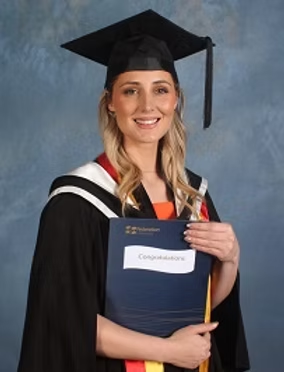

Higher education loves to celebrate its diversity and inclusion initiatives, but let’s be honest, when it comes to Indigenous and disabled students, the system is failing spectacularly. Universities roll out polished equity statements, yet systemic barriers remain firmly in place. These students don’t need more empty gestures; they need structural change. There are some universities like Monash (my workplace) that do a great job of ensuring equity, diversity and inclusion and forever finding the gaps and working on them, but that doesn't mean all universities are.
The Reality Behind the Rhetoric
Indigenous students continue to be underrepresented in higher education. The colonial legacy of education systems in countries like Australia, Canada, and the U.S. means these students often face intergenerational trauma, racism, and financial hardship that institutions struggle to acknowledge in meaningful ways. Scholarships and mentorship programs exist, but they do little to dismantle the systemic issues that prevent access and success.
For disabled students, the struggle is different but just as relentless. Universities pride themselves on “accommodations,” yet these often come with exhausting bureaucratic processes that can put more stress on the student. When I was a student I had to go through the process of giving evidence, meeting with a disability officer, making a plan for my study and more. Sure, this helped, but the process was much harder than just meeting with or sending my academic an email telling them out my disability and how it may affect my learning. Many disabled students are forced to advocate for their rights repeatedly, frequently dealing with outdated policies, inaccessible learning environments, and academics who see accommodations as a burden rather than a necessity. When we properly train our academics and make them competent in understanding the needs of students with a disability, they are better able to accommodate and pull the strengths out of the learner.
The Intersectional Struggle
What happens when a student is both Indigenous and disabled? The challenges multiply. The intersection of racial discrimination, ableism, and socioeconomic disadvantage creates a near-impossible landscape to navigate, universities try, but without people on that panel that struggle with the issue, no one can fully understand and begin making change. Cultural identity can be dismissed in academic spaces, and traditional learning approaches may not align with Indigenous ways of knowing. Meanwhile, disability services often lack the flexibility to incorporate cultural considerations into their frameworks or are under trained, receiving very little professional development in the area.
Tokenism vs. Transformation
Many universities parade their “Indigenous engagement” strategies while failing to provide actual, ongoing support. Hiring an Indigenous academic or adding a land acknowledgment before events does not equate to decolonising education. Similarly, disability inclusion should be more than a checkbox for compliance, universal design of learning (UDL) should be the standard, not the exception. The educational experience for many of us people could dramatically improve by making UDL standard.
What Needs to Change?
Decolonising Curriculum: Indigenous knowledge systems should be embedded in all disciplines, not just sidelined into token electives.
Eliminating Red Tape: Accessibility should be seamless and made as simple as possible, not a battle. Students shouldn’t have to jump through hoops to get basic support. The consequence is that people within these communities drop out because it's like fighting with a vampire, sucking the life out of you.
Culturally Responsive Disability Services: Indigenous students with disabilities need services that respect both their cultural identity and accessibility needs, it's OK to create indigenous space but, really think about the reason it is there and why indigenous students will access the area. How does it benefit their education. Don't just tick a box
Structural Funding: More than scholarships, we need long-term financial and academic support that acknowledges historical disadvantage. For staff and students alike.
If universities truly want to be inclusive, they need to stop patting themselves on the back and start dismantling the barriers that keep Indigenous and disabled students on the margins. The time for performative activism is over—what we need is real, structural change.
What do you think? Are universities truly inclusive, or is it all just smoke and mirrors? Let’s discuss.


Comments